Modern architecture often asks a display to occupy space without behaving like a heavy opaque wall. A shop window may need to retain views through the glass, a curtain wall may have its own structural rhythm, and a curved interior may reject a flat rectangular surface.
These conditions turn display design into a question of transparency, weight, module form, mounting method, and custom dimensions. Collaboration with an LED screen manufacturer becomes relevant when the display must follow the space rather than force the space to accept a conventional LED screen.
Begin with the Role of the Architectural Surface
A solid interior wall can support a seamless display surface where image continuity is the main visual goal. Glass has a different role because it transmits light, preserves sightlines, and contributes to the appearance of the building. Covering it with an opaque display may solve the image requirement while removing the reason the glass was selected.
Designers therefore need to decide what should remain visible when content is active and when the display is dark. Transparency is not merely a product label; it changes the balance between digital imagery and the physical background. Viewing direction, daylight, mounting position, and the size of the glazed area all influence that balance.
Preserve Window Visibility with Transparent Structures
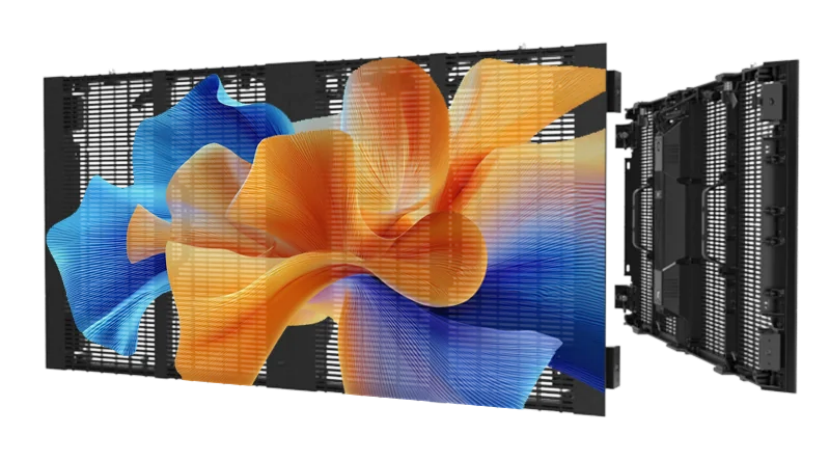
A window that must carry digital content while remaining visually open points toward the transparent window screens developed by HDC. They are designed for medium and large glass windows and support customized sizes and shapes. Highlighted configurations reach a 3840 Hz refresh rate and brightness of at least 5000 cd/m2 while preserving transparency.
This product direction gives retail and interior projects a way to place digital content on glass without treating the opening as a standard opaque wall. The final effect still depends on the relationship between the display, the window, and the viewer.
Content density, viewing distance, exterior light, and interior sightlines need to be tested as one composition. A LED screen manufacturer can contribute product and customization knowledge, while the design team defines how much visual openness the space must retain around the installation.
Mounting position changes what the public sees through the glass and how the digital image aligns with the interior. A concept viewed only from the front may overlook oblique sightlines or reflections. Studying these conditions early gives the transparent surface a defined visual role rather than treating openness as an abstract percentage.
Follow the Rhythm of a Curtain Wall
Large glazed facades introduce structural divisions, varied dimensions, and weight considerations. A display system that ignores mullions or panel proportions may conflict with the building even if it can be physically attached. Hollow or strip-based structures can reduce visual obstruction and give the screen a lighter relationship with the facade.
HDC’s transparent curtain-wall screens use a hollow-strip structure, customizable cabinet dimensions, and a stated design weight of about 10 kg per square meter. The cabinet can follow different glass curtain-wall sizes. These characteristics show how display engineering can respond to an existing architectural grid instead of placing an unrelated rectangle over it.
Use Flexible Media for Curves and Irregular Forms
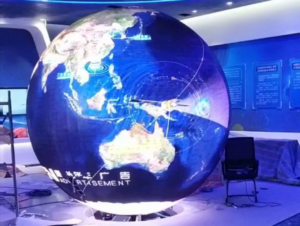
Curved columns, cylindrical surfaces, and irregular interior features require a different module behavior from flat cabinets. The mounting system must follow the surface, and the display material must bend within the limits of its design.
Shape alone is not enough; content preparation and viewing positions also need to account for an image distributed across changing angles. HDC’s adhesive transparent film screens can be mounted to the front or back of glass and can bend around curved or irregular surfaces. Its holographic QX series uses bendable modules for curved, cylindrical, and irregular forms.
These options expand the role of the display from a wall-mounted rectangle to a material that participates in the geometry of the space. They also require early coordination with the LED screen manufacturer because the surface, module layout, and content behavior are interdependent.
Curvature can also alter the apparent proportions of content from different viewpoints. The design team must decide which positions carry the most important view and prepare the visual material for that geometry. Product flexibility creates the physical possibility, while spatial and content planning determine whether the curved result remains coherent.
Bring Manufacturing into the Design Process Early
Concept drawings can express transparency or curvature without resolving cabinet size, mounting, wiring, maintenance, or manufacturability. Early technical review should therefore separate what can use a standard product from what genuinely requires customization, while keeping the architectural intention clear.
Once the surface and installation limits are defined, HDC can connect R&D and engineering with manufacturing, sales, and service. This allows product selection, customization, production feasibility, and later support to be reviewed as one project chain rather than as separate decisions.
The purpose of involving an LED screen manufacturer is not to let a catalog determine the design. It is to translate spatial intent into a configuration that can be produced, installed, and maintained while preserving the character of the architecture.