Content that supports a management decision behaves differently from content designed to stop a shopper in motion. A conference presentation may contain small text and detailed charts, a broadcast studio must present moving images cleanly, and a retail installation may repeat high-impact visual material throughout the day.
Those tasks lead to different judgments about detail, color, sightlines, cabinet layout, and service access. The phrase LED display may describe the equipment broadly, but the application determines how an LED screen must perform inside a specific corporate or retail space.
Let the Content Task Set the Visual Requirement
Information density establishes the first technical priority. Detailed dashboards, presentation slides, and monitoring feeds need enough image definition for nearby viewers to distinguish small elements. Promotional video seen from farther away may place more emphasis on scale and visual impact.
The nearest critical viewing position matters because pixel structure becomes easier to notice as the audience moves closer. Content motion introduces a separate requirement. Refresh rate relates to how frequently the displayed image is updated, which affects the presentation of moving material and its appearance in camera-based environments.
Color processing and color-temperature adjustment influence how the image fits the room and the material being shown. A LED screen specification becomes useful only when these figures are connected to the actual content rather than treated as independent signs of quality.
Translate Pixel Pitch into Viewing Conditions
Fine pixel pitch places pixels closer together and supports greater detail over a given physical area. That can suit conference halls, control rooms, broadcast studios, and premium retail spaces where viewers may approach the display. It does not remove the need to plan overall dimensions, source resolution, or seating distance. A larger image with unsuitable content preparation can still look poor even when the physical pitch is fine.
The relationship also works in the other direction. Selecting the finest available pitch without a close-viewing requirement may increase project complexity without adding a visible benefit at the intended distance. Only after viewing distance, content detail, and screen size are fixed does pixel pitch become a meaningful part of the LED display brief.
Coordinate Cabinet Geometry with the Interior
Cabinet dimensions influence how a display fits a wall, how its overall resolution is assembled, and how installers coordinate edges with surrounding architecture. Panel weight also affects handling and structural planning.
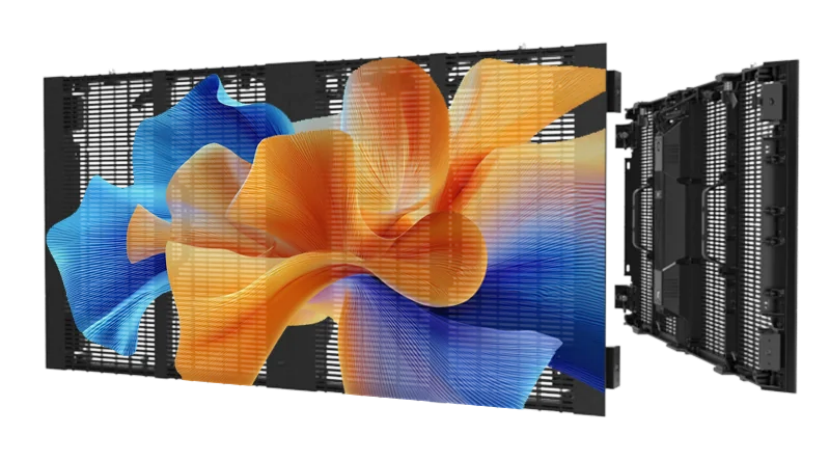
Seamless splicing is valuable because the intended image should read as one surface rather than as a collection of separate units, but physical measurements still have to align with the available opening. Those combined indoor requirements are reflected in the SMD series specified by HDC.
Listed models use 1.2, 1.5, 1.8, 2.0, and 2.5 mm pixel pitches in 640 by 480 by 50 mm die-cast aluminum cabinets weighing 6.5 kg per panel. The line supports seamless splicing and flexible customization for control rooms, conference halls, broadcasting studios, and premium retail spaces. These facts let an LED screen planner connect visual detail with cabinet layout instead of evaluating the two separately.
Read Image Parameters as a Connected System
Brightness, refresh rate, processing depth, color temperature, and viewing angle describe different parts of image behavior. Brightness must suit ambient light. Refresh supports motion presentation. Processing depth affects the range of tonal information the system can handle, while adjustable color temperature provides control over the visual character of white and the balance of the image.
Viewing angle indicates how far people can move from the central position while retaining a usable view. The HDC indoor line lists a 3840 Hz refresh rate, 600 cd/m2 white-balance brightness, 12 to 14 bit processing depth, adjustable color temperature from 2000 K to 9300 K, and viewing angles of 160 degrees horizontally and 140 degrees vertically.
A LED display project can use these figures to test whether the proposed configuration fits the room’s light, content, and audience distribution rather than comparing a single headline number.
Make Maintenance Part of Daily Operation
Service access determines what happens after installation. A display set against an interior wall may not have usable space behind it, and removing surrounding finishes for routine work can disrupt the room. Full front maintenance gives technicians a service route from the viewing side, which can be valuable where the rear is enclosed or inaccessible.
Access also affects the sequence of interior construction. If the service method is known early, surrounding finishes and equipment clearances can be coordinated around it. If it is discovered late, even a visually suitable system may require changes to the wall or service plan. Daily operability is therefore partly determined during design.
Daily operation becomes the final test of an indoor specification; for its SMD series, HDC lists full front maintenance and a stated 100000 hour lifespan. More importantly for project delivery, HDC combines R&D, manufacturing, sales, and service, so cabinet design, customization, production feasibility, and after-sales support can be coordinated around the same application brief. In corporate and retail spaces, image performance and serviceability therefore meet not only at the physical grid occupied by the LED screen, but across the product’s full delivery cycle.